
Story of Georgian Prince, Who Fought on the Side of the Boers in South Africa 🇬🇪🇿🇦
When you see the headline of this blog, you might be surprised at how it was possible for a 19th-century Georgian prince to end up on another continent. However, his story is very interesting, and I am glad to present it in a simple way, accessible to ordinary readers rather than at an academic level.
Before moving to the main topic, I would like to briefly introduce the Georgian royal dynasty, the Bagrationi family. They ruled Georgia for almost nine centuries, from the 10th to the 19th century. We can say they are one of the longest-ruling dynasties in the world, after the imperial family of Japan.
In 1801, the Russian Empire abolished the Georgian Kingdom and exiled members of the family of the last king of Georgia, George XII. However, other branches of the Bagrationi family continued to live in Georgia. Niko Bagrationi belonged to one of these branches. Their residence was in the village of Mukhrani, so they were known as the Mukhrani Bagrationis.

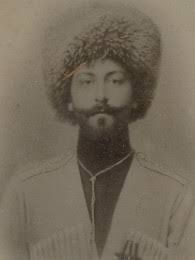
Niko Bagrationi was born in 1868 in Mukhrani, (40 km from Tbilisi) where he also grew up. From childhood, he loved traveling and adventure. One of the influences on his imagination was the Georgian literary masterpiece The Knight in the Panther’s Skin by Shota Rustaveli, in which the main character travels across the world, including to India.
When he grew up, his first journey abroad was to Russia, where he attended the inauguration of a Russian emperor. He was physically very tall, almost two meters in height. While in Russia, he became acquainted with another Georgian nobleman, Orbeliani, who invited him to go to South Africa for lion hunting. Niko Bagrationi was inspired by this idea, and they traveled to Paris on their way to South Africa. However, Orbeliani enjoyed Paris so much that he changed his mind and decided to stay there. Niko, on the other hand, remained determined to continue his journey.
On the ship, he met a new friend, the French Count de Breda, who convinced him not to go lion hunting but instead to support the Boers. At that time, it was quite popular internationally for volunteers to join the Boer side, similar in spirit to modern foreign volunteers in conflicts such as Ukraine.

Before arriving, Niko learned that the Boer republics in South Africa were at war with the British Empire. His initial goal changed, and he decided to join the Boers in their struggle against Britain. In his mind, the Boers were similar to Georgia, which had also been colonized by a larger empire.
During his journey, he first arrived in Madagascar and was impressed by the country, reportedly saying that the sky there felt much brighter than in his native Mukhrani.
Finally, in 1899, Niko Bagrationi arrived in South Africa at the port of Lourenço Marques (today’s Maputo), which was then a Portuguese colony and an important gateway to Southern Africa. From there, he traveled to Pretoria, the capital of the Transvaal Republic. He met President Paul Kruger and became a volunteer in the Boer army.
An interesting fact is that his unit reportedly captured Winston Churchill, who at that time was working as a military correspondent and was later Churchill managed to escape by the because they were relatively soft with prisoners of war.

In 1900, Niko Bagrationi was captured by the British. He was initially sentenced to death, but when British officers discovered he was a member of a royal family, his sentence was changed to exile on Saint Helena, the same island where Napoleon Bonaparte was once imprisoned.
When the war ended, he was released and went to France. Later, he returned to Georgia and wrote a book about his adventures before the Soviet invasion of 1921. He lived in a large palace in Mukhrani and was considered a wealthy nobleman. However, after the Soviets confiscated his property, the only way for him to survive was by selling tobacco at a train station in Tbilisi.
Despite all these hardships, he was not executed. He eventually passed away from natural causes in Tbilisi.
Mukhran guliashvili
used sources:
Comments